

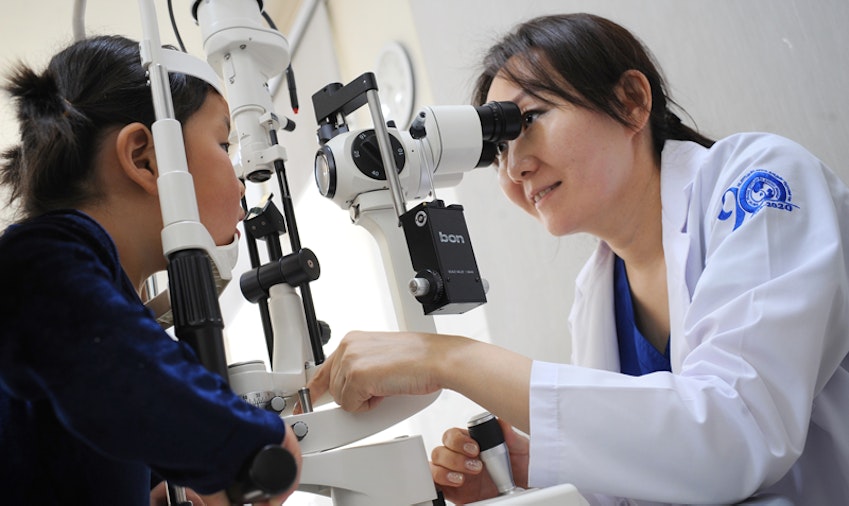
In Mongolia, access to high-quality, affordable eye care services is limited in both urban and rural areas. Lack of equipment, training, and infrastructure are major barriers to adequate care and there is no comprehensive framework to treat children’s eye disease.
Mongolia has one of the lowest cataract surgical rates in Asia – 1,400 per million people each year. Currently, 90% of all cataract surgeries are performed in the capital city, as out of 21 provinces only six have the capacity to conduct cataract surgery.

Fighting blindness in Mongolia
The Orbis Flying Eye Hospital first visited Mongolia in 1989 to help improve the skills of local eye teams. Since then there have been further training projects on board the Flying Eye Hospital, in local hospitals, and online via our telemedicine platform, Cybersight.
The Problem

NowThis Kids cover the story of Marla who received surgery thanks to an Orbis trained eye doctor.
Success in Mongolia
Orbis launched a four-year project with the National Center for Maternal and Child Health, the main provider of children’s eye care in the country, and five county-level hospitals in rural Mongolia in 2014. The project helped develop a model for comprehensive vision care that provides services from basic vision screening to the management of more complex pediatric eye disorders like retinopathy of prematurity.

Orbis has been working in Mongolia since 1989.
Your support has helped us to conduct more than 9,300 screenings for babies at risk of retinopathy of prematurity, mostly at the National Center for Maternal and Child Health.
As a result of our ongoing advocacy work, we’ve helped make pediatric eye health a priority for Mongolia’s policymakers and the Ministry of Health.
We are contributing to the national model of diabetes prevention and diabetic retinopathy care to ensure those at risk can access timely interventions.
We are helping create a network of seven provincial hospitals carrying out manual small-incision cataract surgery, with ongoing awareness activities in local communities to help improve access to and uptake of care.
We also helped create an innovative model of ophthalmic education by establishing a digital training hub and remote surgical mentorship program. This program has helped many of our local partners, such as Dr. Battsetseg, access remote mentorship to deal with complicated cases via our online telemedicine platform, Cybersight.

Dr. Battsetseg was able to help little Rose thanks to online mentorship facilitated by Orbis.
Impact In 2022
42,000
Adults and children screened.

450
Trainings for eye health professionals.

77,000
Patient visits to eye health services.
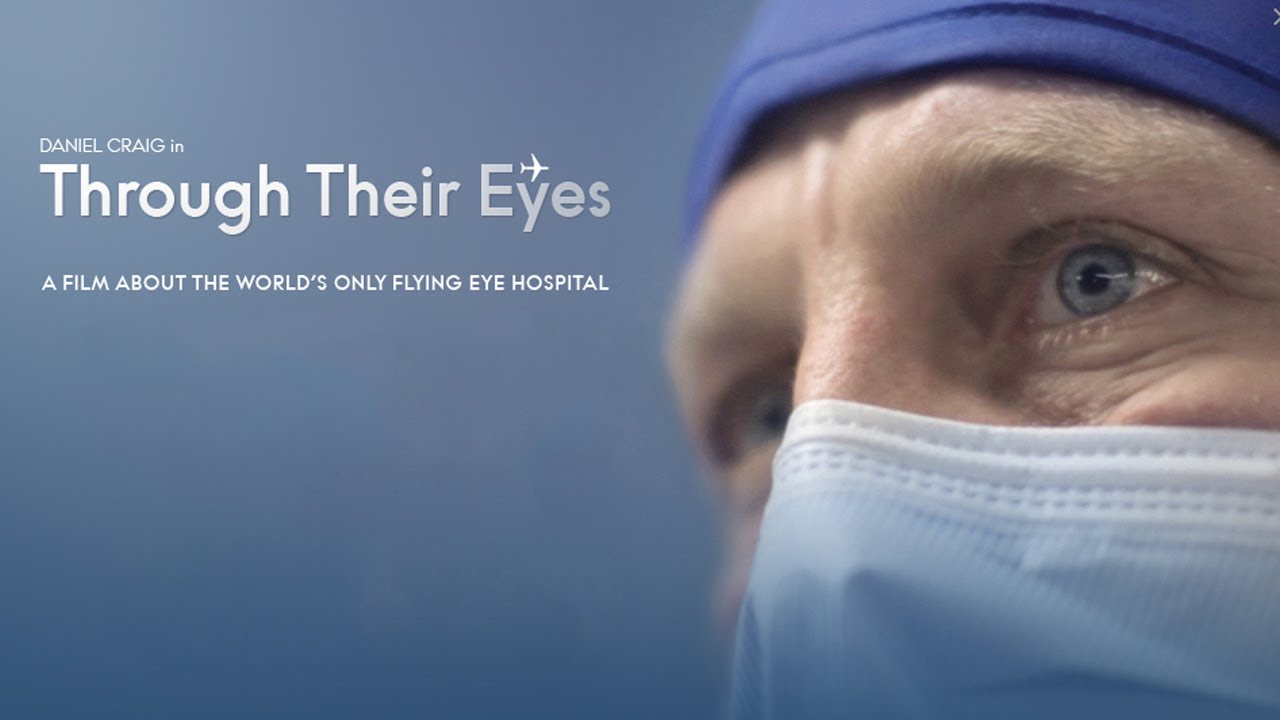
Flashback! Through Their Eyes is a film made in partnership with OMEGA featuring Daniel Craig's visit to Mongolia with us in 2012.
Key Achievements
- Hosted eight Flying Eye Hospital projects
- Hosted two virtual Flying Eye Hospital project when in-person training wasn't possible due to the COVID-19 pandemic
- Established or improved 10 neonatal intensive care units have been through the provision of equipment and training of physicians
- Supported the establishment or improvement of:
- 11 secondary hospitals
- Three tertiary hospitals
- One wet lab
- Supported the inclusion of retinopathy of prematurity screening for newborns in the National Neonatal Screening program.
- Contributed to the increase in the pediatric cataract surgery rate at the National Center for Maternal and Child Health from 20 cases per year to 100 cases per year.
- Retinal imaging is being used in 5 diabetic clinics for diabetic retinopathy screening for the first time in Mongolia in 2022.


What We're Doing Next
Our long-standing efforts have helped make pediatric eye health a priority for Mongolia's policy makers and the Ministry of Health. Building on our past success, we will continue to work with our partners on the following areas:
- Train critically needed eye health professionals
- Provide essential equipment and instruments to partners
- Lead research and advocacy work to raise awareness of eye health
- Work with policymakers to address unmet needs, from access to refraction screening and corrective lenses, to care for complex eye diseases, particularly for children
Our Partners in Mongolia
- National Center for Maternal and Child Health
- Mongolia Ministry of Health
- Mongolian Diabetes Association
- Mongolia First Central Hospital
- Third Central Hospital of Mongolia
- ENSURE EVERYONE HAS ACCESS TO QUALITY EYE CARE ACROSS MONGOLIA
Donate Today

50

75

100
If you are interested in working with Orbis to help improve the quality of life in communities around the world, please contact us at [email protected].
We are especially looking for program partners in the field of pediatric eye care, trachoma elimination, strengthening human resources for eye health, gender equity, disability inclusion, internally displaced populations, and community-based primary care.
